Posts

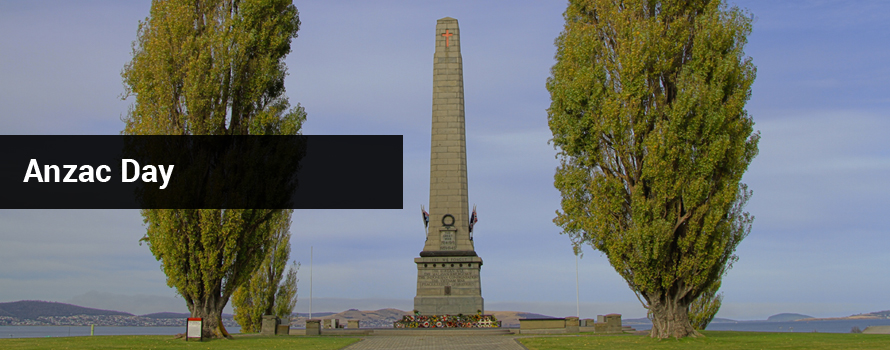
Anzac Day

Image
Introduction and Origin – The word Anzac stands for Australian and New Zealand Army Corps whose soldiers were known as Anzacs were the brave soldiers who stood, Fought and died during First World War started in 1914, back then Australia had been under the control of British Empire for 23 years and New Zealand for 7 years. In 1915, Australia and New Zealand became witness to the new army of volunteer soldiers. The brave forces went out to the Gallipoli Peninsula to claim Constantinople the capital of the Ottoman Empire and one of Germany’s allies. The Anzacs landed on April 25 th but the Ottoman Turkish defenders were ready for the attack. The soldiers knew that  winning was impossible, Nevertheless they continued to fight for 8 months notwithstanding the hardships ,bloodshed and the loss of over 8,ooo lives, The end of 1915 marked the end of the battle for the Anzacs. They were successfully evacuated by the British. The story of the Soldiers THE Anzac legends who gave their live...

Las Fallas Festival

Image
INTRODUCTION AND ORIGIN – Las Fallas is Valencia’s most important festival and has been added to the UNESCO World Heritage List. Las Fallas in Valencia is one of Spain’s most famous festivals, It is a 5-day street party with spectacular fireworks and glittering exhibits that culminate in everything that is on fire. Its roots were traced back to the Middle Ages when carpenters burned pieces of wood that were used to lift their lamps during the winter to mark the arrival of spring. Eventually, they added a couple of old clothes to the fire, made them appear as symbols, and developed into the nine notes (Valencian dolls) we see today. Magnificent images of papier-mâché (known as fallas) can now be found throughout the region. A falla is a ninety-composed scene designed to create a humorous or political scene, often featuring current actors such as celebrities and politicians. Falla infantil (baby falla) and key falla are two types of fallas. EVENTS OF LAS FALLAS DE VALENCIA- Although the ...

Thanksgiving Day

 Introduction and origin – Thanksgiving Day is celebrated in America on the 4th Thursday of November. This holiday has a long history which started in 1620 where a group of people called pilgrims arrived in the new world on boards of ships called mayflower. They had dreams of religious freedom. Mayflower arrived in New England on November 11, 1620, after a voyage of 66 days.  Pilgrims had originally intended to settle near the Hudson River in New York.  Their first winter in America was full of hardships and drama. They arrived too late to farm the land so they starved and half of the colony died out of disease. The following spring the native tribe of local Americans taught them how to grow crops, hunt and fish. In the autumn of 1621, the pilgrims got a rich harvest of barley, beans, pumpkin and other vegetables. The first Thanksgiving was a three-day feast, where they all praised the Lord and thanked him for the food and wealth he gave them; this is how the festi...

Waitangi Day

 Introduction and Origin –     Waitangi Day is New Zealand’s National day. It happens every year on 6th of February a day when New Zealand became a nation. The treaty of Waitangi (New Zealand’s Founding document was signed on this day in 1840) In a house belonging to James Busby at Waitangi, in the Bay of Islands. But the holiday wasn't celebrated officially till 1934 and wasn't a national public holiday until 1974. The name of the holiday has alternated with New Zealand Day a couple times. In 1974 New Zealand celebrated Waitangi Day on February 6th for the first time as a Public Holiday.   Ways of celebration –   There are a variety of ways in which New Zealand celebrates Waitangi Day. Celebrations take place all across New Zealand cities and Waitangi itself. At Waitangi, commemorations usually begin the day before on 5th February. Live entertainment, Maori food and kite flying are major highlights of this day. Family focussed Events like Picni...

Saint-Jean-Baptiste Day

 Introduction and history Saint –Jean –Baptiste day is celebrated on the 24th of June. It is a day of public Holiday in Quebec and other areas of French Canada. St. John Baptiste is a Jewish preacher who baptized Jesus in the lake of Jordan. This day is also known as la saint –Jean, St. John the Baptist Day, Fete Nationale Quebec and Quebec’s National holiday. The history of this festival is associated with the celebrations of the summer solstice an ancient pagan tradition in which fires were lit to celebrate light on the longest day of the year. The Roman Catholic church of France also adopted this holiday and associated it with John the Baptist as a cousin of Jesus. From just being attached to religious views by the passage of time this day expanded and became more focused on the Culture, Art, and unity of Quebec. Saint –Jean – Baptiste, The day is now seen as a time for national unity and also served as a platform for the artists and politicians.   Ways of celebrati...

Civic day

  Introduction and origin – The civic day is celebrated on the first Monday of August is a holiday for in all province s except for Quebec, Newfoundland and Labrador, Ontario, and Yukon.  It is also known as August long Weekend, Provincial day , Terry fox Day , The first week of August. The tradition of a holiday in the middle of summer in Toronto dates back to 1869 and was formally created in 1875 when the first Monday in August became the August Civic Holiday in Toronto. Today, Civic Holiday is a non-statutory holiday in Ontario and provincially regulated employers are not required to treat this as a holiday. Ways of celebration- Various events are to celebrate aspects of local culture, history, and achievements are held on this day. People also enjoy this by making and distributing cakes, playing various events, cooking communal meals, barbecues, enjoying beautiful sights of fireworks etc. This day mainly focuses on celebrating culture, Tradition and unity. How kids...

Diwali

  Introduction and origin – Diwali  also known as  Deepawali is one of  India’s biggest  Festivals.  The word 'Deepawali' means rows of lighted lamps. It is a festival of lights and Hindus celebrate it with joy. Diwali is a celebration of the victory of good over evil. It is the festival of light, celebrated all over India marks the return of Lord Rama to Ayodhya. It is said that Rama returned to Ayodhya after killing Ravana on the day of Diwali. The people of Ayodhya celebrated his homecoming at lit their houses with Diyas. It is a festival of light, joy, and prosperity. This festival is celebrated in the  Hindu month of Kartikamasam falls sometime during October or November. In India it is celebrated by Hindus, Jain, and Sikhs. Deepawali is celebrated and is a public holiday in countries such as Nepal, Sri Lanka, Singapore, Malaysia, Mauritius, Fiji, Suriname, Guyana, Trinidad, and Tobago. It is also a school holiday in many states of the ...